Dynamic vs Static Stretching: When to Use Each
Stretching is one of the most commonly recommended components of a fitness routine. Athletes, coaches, and fitness professionals frequently emphasize its importance for improving flexibility, reducing injury risk, and enhancing performance. However, not all stretching methods are the same.
Two of the most popular types of stretching are dynamic stretching and static stretching. While both have important benefits, they serve different purposes and should be used at different times. Understanding when and how to use each type can help athletes maximize performance while supporting long-term mobility and recovery.
In this guide, we’ll explore the differences between dynamic and static stretching, examine their benefits, and explain how to incorporate both into an effective training routine.
What Is Dynamic Stretching?
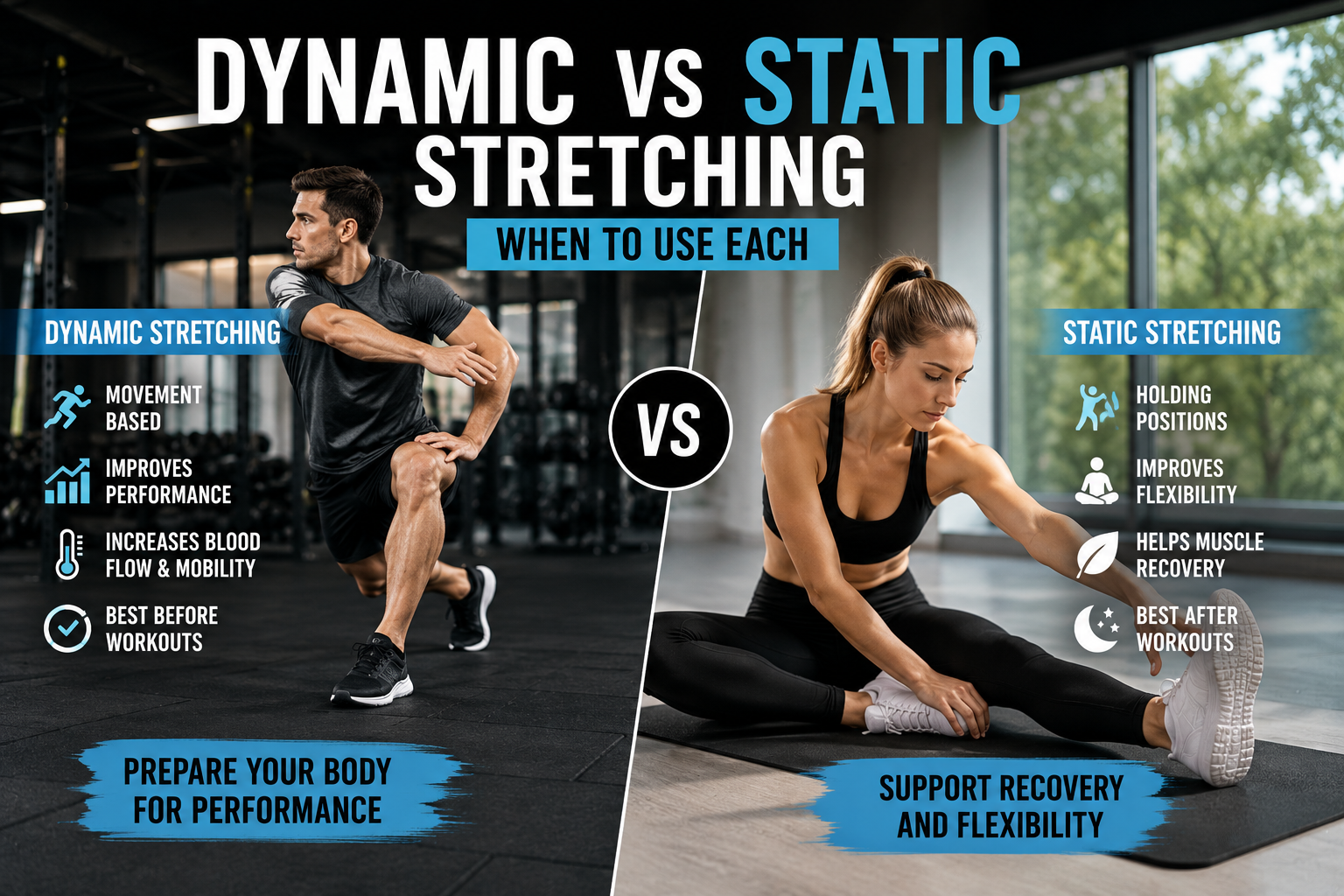
Dynamic stretching involves controlled movements that take joints and muscles through a full range of motion. Unlike traditional stretching, dynamic stretches are performed while the body remains in motion.
The primary goal of dynamic stretching is to prepare the body for physical activity. These movements increase blood flow, elevate body temperature, activate muscles, and improve joint mobility.
Examples of Dynamic Stretches
- Leg swings
- Arm circles
- Walking lunges
- High knees
- Butt kicks
- Torso rotations
- Inchworms
- Skipping drills
Dynamic stretching is often included as part of a pre-workout warm-up routine.
Benefits of Dynamic Stretching
Improves Athletic Performance
Research consistently shows that dynamic stretching can enhance athletic performance when performed before exercise. By activating muscles and preparing movement patterns, athletes may experience improved speed, power, and coordination.
Increases Blood Flow
Dynamic movements help increase circulation throughout the body. This delivers oxygen and nutrients to working muscles before activity begins.
Enhances Mobility
Regular dynamic stretching can improve joint mobility and movement efficiency, allowing athletes to move more freely during training and competition.
Prepares the Nervous System
Dynamic stretching activates the nervous system and helps athletes transition from rest to high-performance activity more effectively.
What Is Static Stretching?
Static stretching involves holding a stretch position for a specific period of time, typically between 15 and 60 seconds. The goal is to gradually lengthen muscles and improve flexibility.
Unlike dynamic stretching, static stretching is generally performed while the body remains still.
Examples of Static Stretches
- Hamstring stretch
- Quadriceps stretch
- Calf stretch
- Shoulder stretch
- Hip flexor stretch
- Butterfly stretch
- Chest stretch
- Triceps stretch
Static stretching is most commonly performed after workouts or during dedicated flexibility sessions.
Benefits of Static Stretching
Improves Flexibility
Static stretching remains one of the most effective methods for improving long-term flexibility. Consistent stretching can increase range of motion and reduce muscle tightness.
Supports Recovery
While static stretching may not completely prevent muscle soreness, it can help athletes relax muscles and feel less stiff after intense exercise.
Promotes Relaxation
Holding stretches encourages deep breathing and relaxation, making static stretching an excellent way to cool down after training.
Improves Posture
Regular flexibility work can help correct muscular imbalances that contribute to poor posture and movement limitations.
Key Differences Between Dynamic and Static Stretching
Movement vs Stillness
The most obvious difference is that dynamic stretching involves movement, while static stretching requires holding a position.
Purpose
Dynamic stretching focuses on preparing the body for activity. Static stretching focuses on increasing flexibility and promoting recovery.
Timing
Dynamic stretching is generally best before workouts. Static stretching is usually more effective after workouts.
Performance Effects
Dynamic stretching can improve immediate athletic performance. Static stretching performed immediately before explosive activities may temporarily reduce power output in some situations.
When Should You Use Dynamic Stretching?
Dynamic stretching should be performed before physical activity, especially activities that require speed, strength, power, or agility.
Ideal Situations for Dynamic Stretching
- Before running
- Before strength training
- Before team sports
- Before sprinting sessions
- Before competitions
- As part of a warm-up routine
A dynamic warm-up typically lasts between five and ten minutes and gradually increases intensity.
When Should You Use Static Stretching?
Static stretching is most effective after exercise when muscles are warm and more receptive to lengthening.
Ideal Situations for Static Stretching
- After workouts
- During recovery days
- During yoga sessions
- As part of a flexibility program
- Before bedtime relaxation routines
Most stretches should be held for 20–60 seconds and repeated two to four times for optimal flexibility gains.
Can You Combine Both Methods?
Absolutely. In fact, most athletes benefit from using both dynamic and static stretching as part of a complete mobility program.
A balanced approach may look like this:
Before Training
- Light cardiovascular warm-up
- Dynamic stretching exercises
- Sport-specific movement drills
After Training
- Light cool-down activity
- Static stretching routine
- Deep breathing exercises
This combination prepares the body for performance while supporting long-term flexibility and recovery.
Common Stretching Mistakes
Skipping Warm-Ups
Many athletes jump directly into intense exercise without preparing their muscles. Dynamic stretching can significantly improve readiness for activity.
Stretching Through Pain
Stretching should create mild tension, not pain. Forcing a stretch can increase injury risk.
Ignoring Mobility Limitations
Tight muscles and restricted joints can negatively affect performance. Addressing these issues consistently is more effective than occasional stretching sessions.
Using Only One Method
Relying exclusively on either dynamic or static stretching limits potential benefits. Both methods have valuable roles in a complete fitness program.
Final Thoughts
Dynamic and static stretching are not competing techniques—they are complementary tools that serve different purposes. Dynamic stretching helps prepare the body for movement and improves performance, while static stretching supports flexibility, recovery, and relaxation.
For most athletes, the best strategy is simple: use dynamic stretching before workouts and static stretching afterward. This balanced approach can improve mobility, reduce injury risk, and help you perform at your best throughout every stage of training.