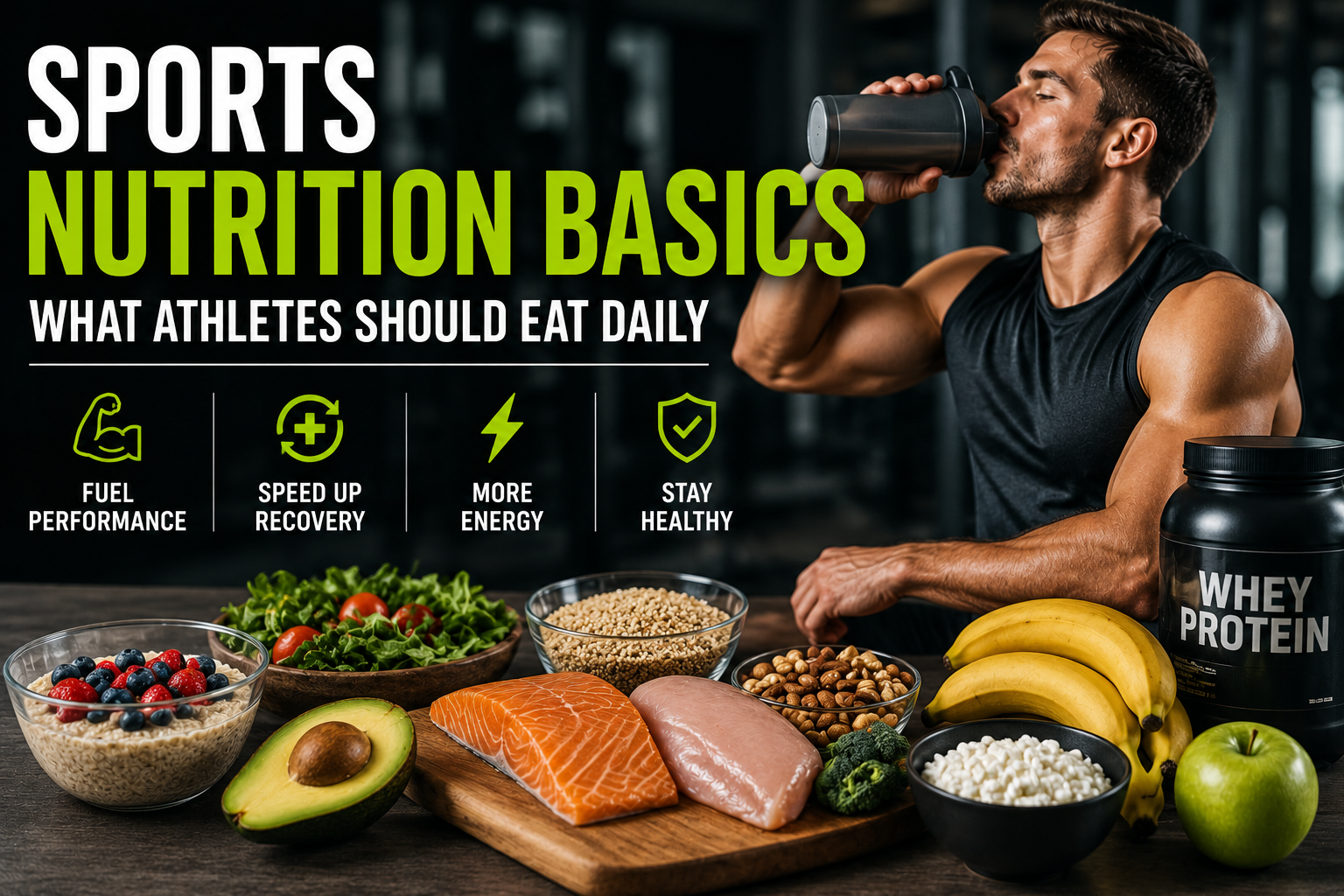
Sports Nutrition Basics: What Athletes Should Eat Daily
Training hard in the gym, on the field, or on the track is only one part of athletic success. Proper nutrition plays an equally important role in performance, recovery, and long-term health. Even the most effective training program can produce disappointing results if the body does not receive the nutrients it needs.
Sports nutrition is not just for professional athletes. Anyone who participates in regular physical activity can benefit from a structured nutrition plan. Understanding what to eat, when to eat, and how different nutrients affect performance can help athletes maximize results while reducing fatigue and injury risk.
In this guide, we’ll cover the essential principles of sports nutrition and explain what athletes should include in their daily diet.
Why Nutrition Matters for Athletes
Food serves as the body’s primary source of energy and recovery. Every workout places stress on muscles, joints, and energy systems. Proper nutrition helps replenish fuel stores, repair muscle tissue, support immune function, and prepare the body for future training sessions.
Benefits of good sports nutrition include:
- Improved athletic performance
- Faster recovery after workouts
- Increased strength and endurance
- Better body composition
- Reduced injury risk
- Enhanced mental focus and concentration
- Greater energy throughout the day
Athletes who consistently fuel their bodies correctly often experience more stable performance and better long-term progress.
The Three Essential Macronutrients
The foundation of sports nutrition is built around three macronutrients: carbohydrates, protein, and fats. Each plays a unique role in supporting athletic performance.
Carbohydrates: The Primary Energy Source
Carbohydrates are the body’s preferred fuel source during moderate and high-intensity exercise. They are stored as glycogen in muscles and the liver, providing readily available energy for training and competition.
Healthy carbohydrate sources include:
- Oats
- Brown rice
- Whole-grain bread
- Sweet potatoes
- Quinoa
- Fruits
- Vegetables
- Beans and legumes
Many athletes mistakenly reduce carbohydrate intake when trying to improve body composition. However, insufficient carbohydrates often lead to decreased performance, fatigue, and slower recovery.
Protein: Building and Repairing Muscle
Protein provides amino acids that help repair damaged muscle tissue and support muscle growth after exercise.
Common high-quality protein sources include:
- Chicken breast
- Turkey
- Fish
- Eggs
- Greek yogurt
- Cottage cheese
- Lean beef
- Protein powders
- Tofu and tempeh
Most active individuals benefit from consuming protein throughout the day rather than eating large amounts in a single meal.
Healthy Fats: Essential for Performance
Dietary fats support hormone production, brain function, vitamin absorption, and overall health. They also serve as an important energy source during lower-intensity activities.
Healthy fat sources include:
- Avocados
- Nuts
- Seeds
- Olive oil
- Fatty fish
- Natural nut butters
Healthy fats should be included regularly as part of a balanced sports nutrition plan.
The Importance of Hydration
Hydration is often overlooked, yet it may have a greater impact on athletic performance than many athletes realize. Even mild dehydration can reduce strength, endurance, reaction time, and concentration.
Water is essential for:
- Temperature regulation
- Nutrient transport
- Joint lubrication
- Muscle contractions
- Cardiovascular function
Daily Hydration Tips
- Drink water consistently throughout the day
- Monitor hydration status through urine color
- Increase fluid intake during hot weather
- Replace fluids lost during training
- Use electrolyte drinks during prolonged exercise sessions
Athletes should begin workouts already hydrated rather than trying to catch up afterward.
Pre-Workout Nutrition
Eating before exercise provides the energy needed to perform at a high level. The ideal pre-workout meal should contain carbohydrates, moderate protein, and limited amounts of fat.
Examples of Pre-Workout Meals
- Oatmeal with fruit and Greek yogurt
- Whole-grain toast with eggs
- Chicken with rice and vegetables
- Banana with peanut butter
- Protein smoothie with fruit
Most athletes perform best when eating one to three hours before training, depending on personal preference and digestion.
Post-Workout Nutrition
Recovery nutrition begins immediately after exercise. During this period, muscles are especially receptive to nutrients that support repair and glycogen replenishment.
Key Recovery Nutrients
Protein helps repair muscle tissue, while carbohydrates restore depleted energy stores.
Examples of effective post-workout meals include:
- Grilled chicken with rice
- Protein shake with fruit
- Greek yogurt with berries
- Salmon with sweet potatoes
- Eggs with whole-grain toast
Consuming protein and carbohydrates within a few hours after training can support optimal recovery.
Micronutrients Athletes Should Not Ignore
While macronutrients receive most of the attention, vitamins and minerals are equally important for athletic performance.
Important Micronutrients
- Iron for oxygen transport
- Calcium for bone health
- Magnesium for muscle function
- Vitamin D for immune support
- Potassium for hydration balance
- Zinc for recovery and hormone production
A varied diet rich in fruits, vegetables, lean proteins, and whole grains typically provides most necessary micronutrients.
Common Sports Nutrition Mistakes
Skipping Meals
Missing meals can reduce energy levels and make recovery more difficult.
Not Eating Enough Protein
Insufficient protein intake may slow recovery and limit muscle development.
Ignoring Hydration
Many athletes focus heavily on food while neglecting fluid intake.
Overreliance on Supplements
Supplements can support a healthy diet, but they should never replace whole foods.
Extreme Dieting
Highly restrictive diets often lead to nutrient deficiencies and reduced athletic performance.
Sample Daily Nutrition Plan
Breakfast
Oatmeal with berries, almonds, and Greek yogurt.
Lunch
Grilled chicken, brown rice, mixed vegetables, and olive oil dressing.
Snack
Apple with peanut butter and a protein shake.
Dinner
Salmon, sweet potatoes, and steamed vegetables.
Evening Snack
Cottage cheese with fruit.
This type of meal structure provides a balanced combination of carbohydrates, protein, healthy fats, vitamins, and minerals.
Final Thoughts
Sports nutrition is one of the most powerful tools athletes can use to improve performance and recovery. While training stimulates adaptation, nutrition provides the building blocks needed for those adaptations to occur.
By focusing on balanced meals, proper hydration, adequate protein intake, and smart meal timing, athletes can support their goals and maximize their potential. Consistency is the key. Small improvements in daily nutrition habits can produce significant results over time.